top of page

Curious
Entanglements

2022 -

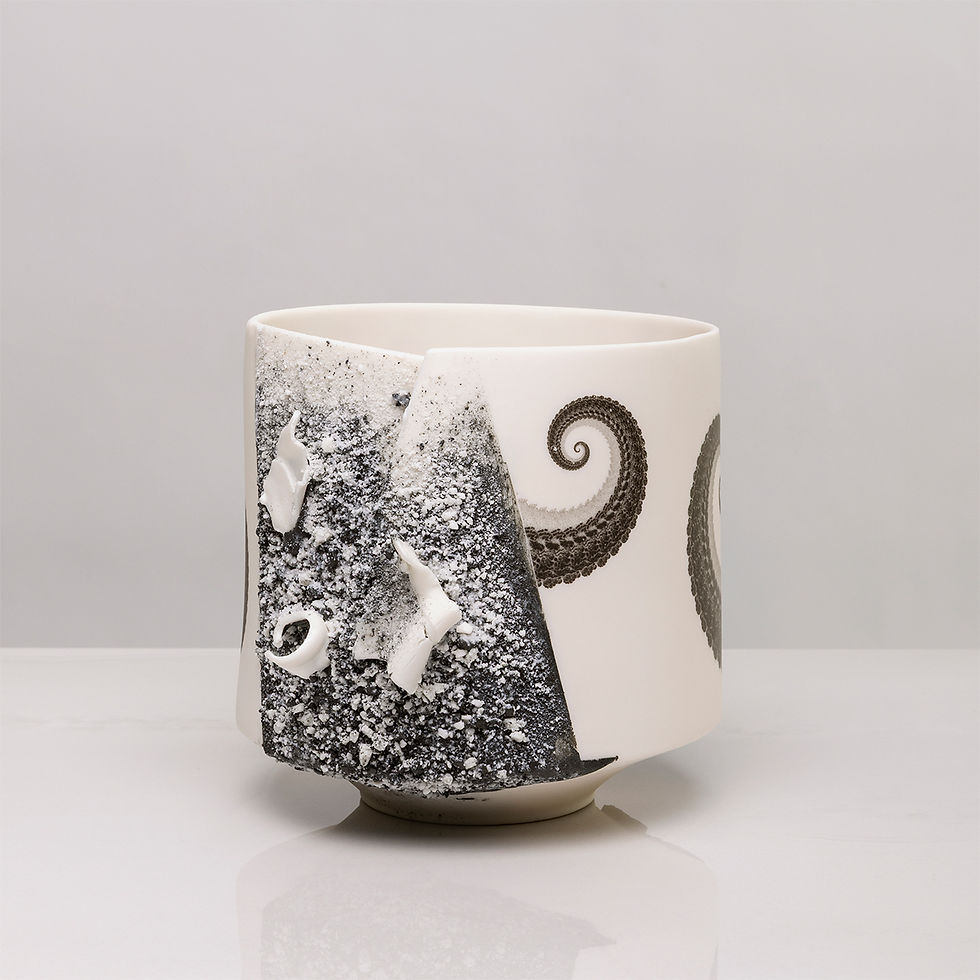
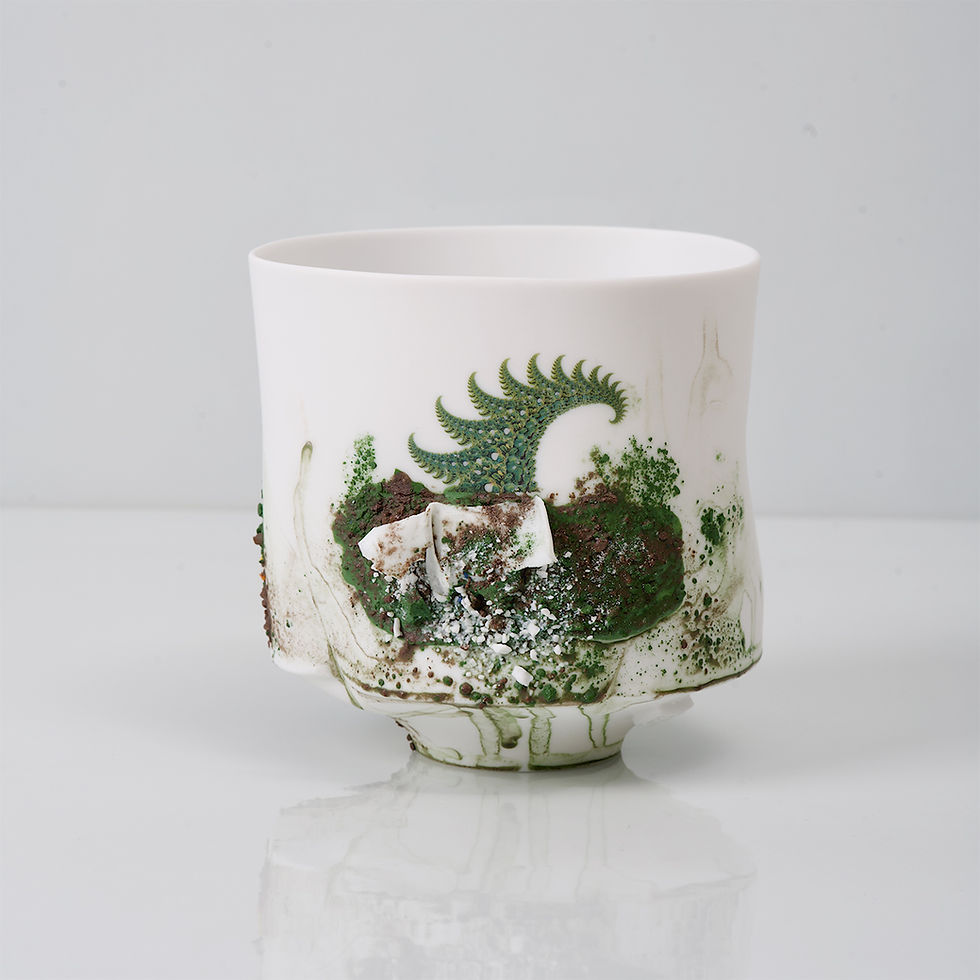
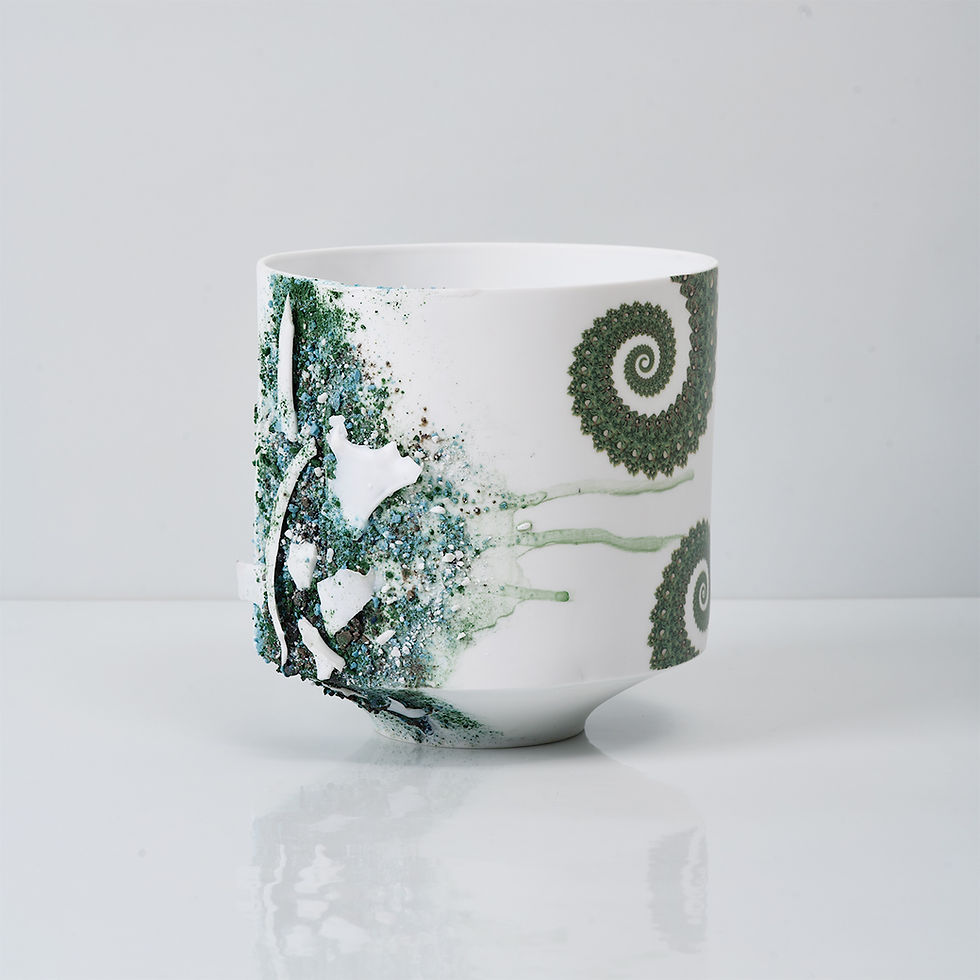
Deep Etch - Curious Entanglements VII (1).png
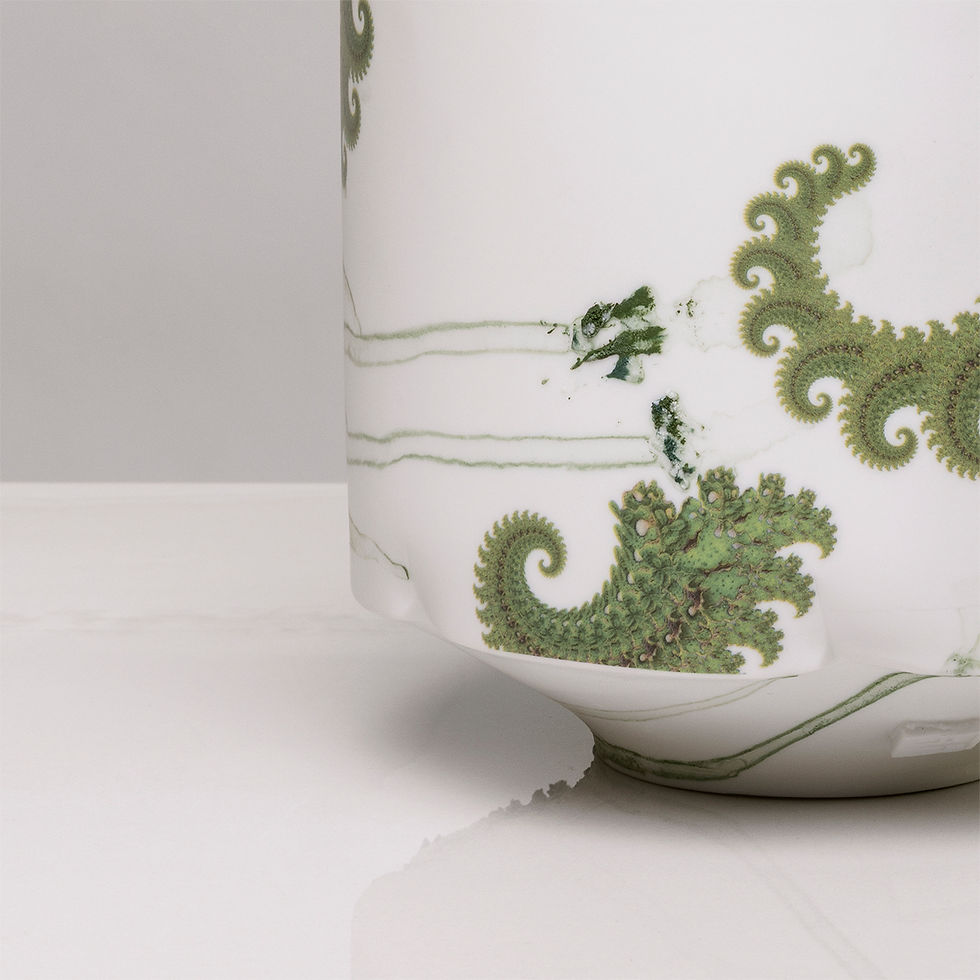
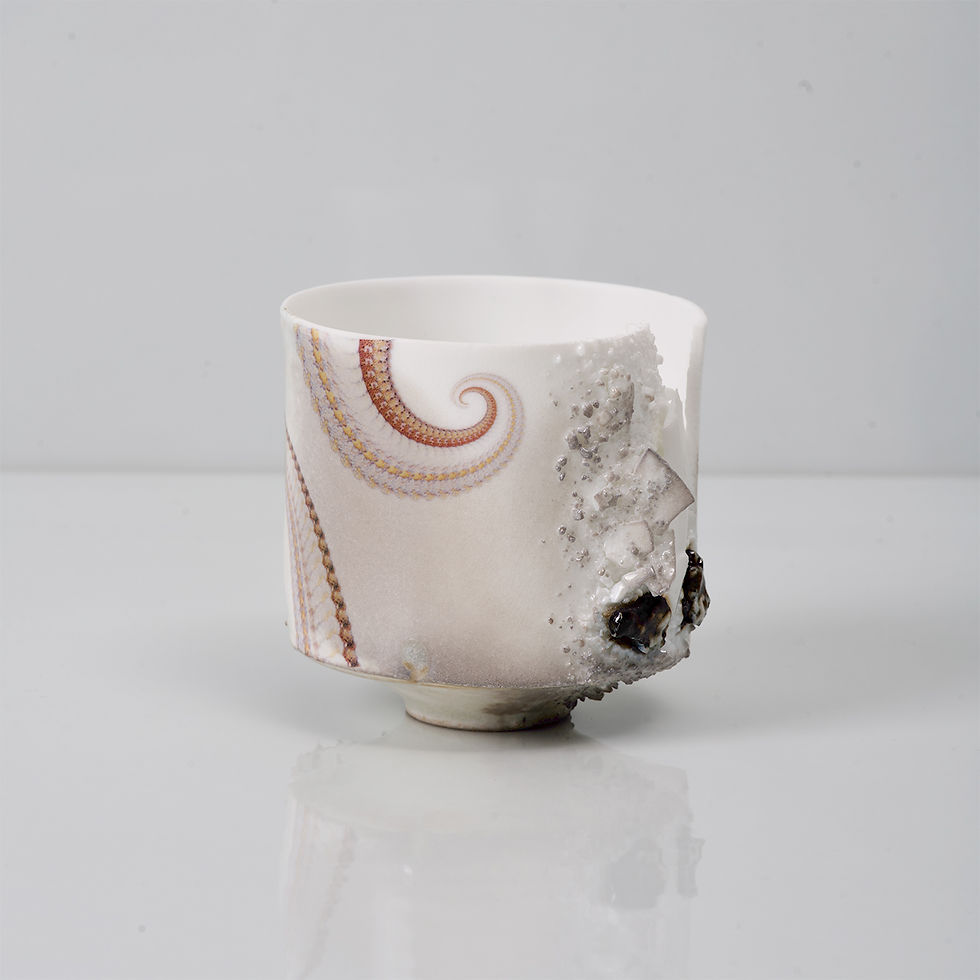
Deep Etch - Lichen VI (1).png
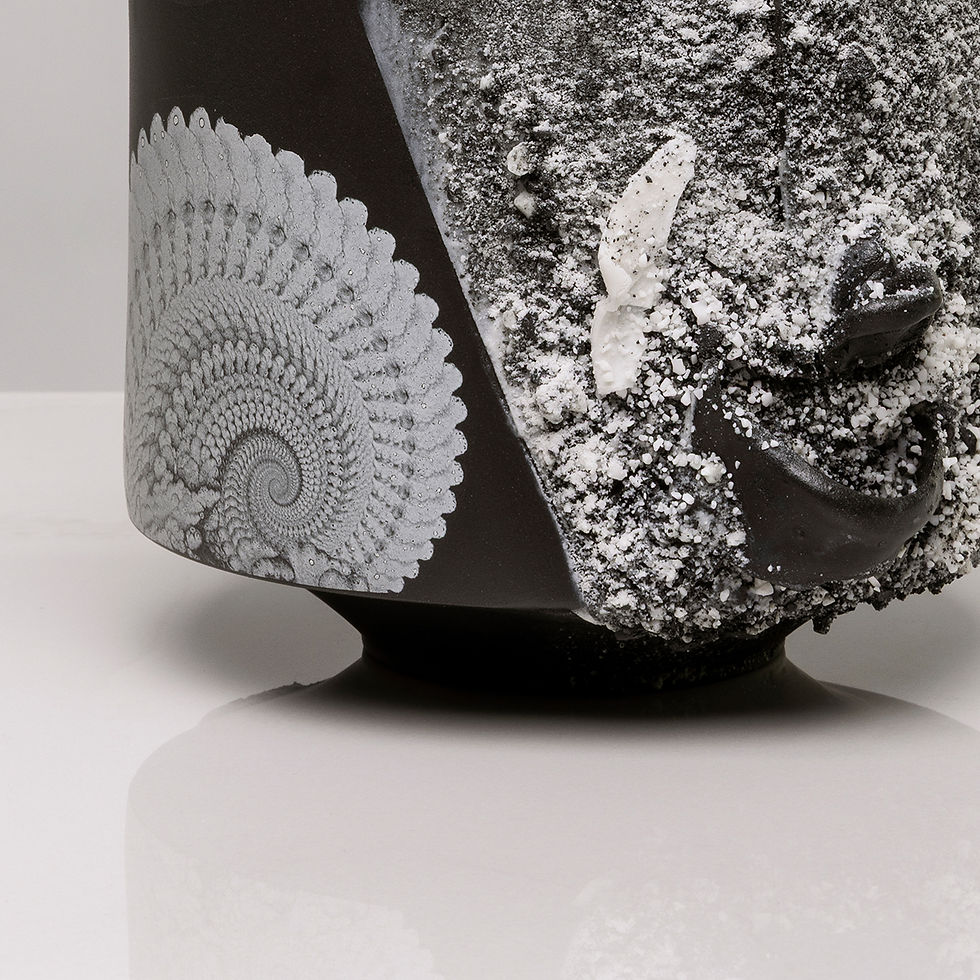
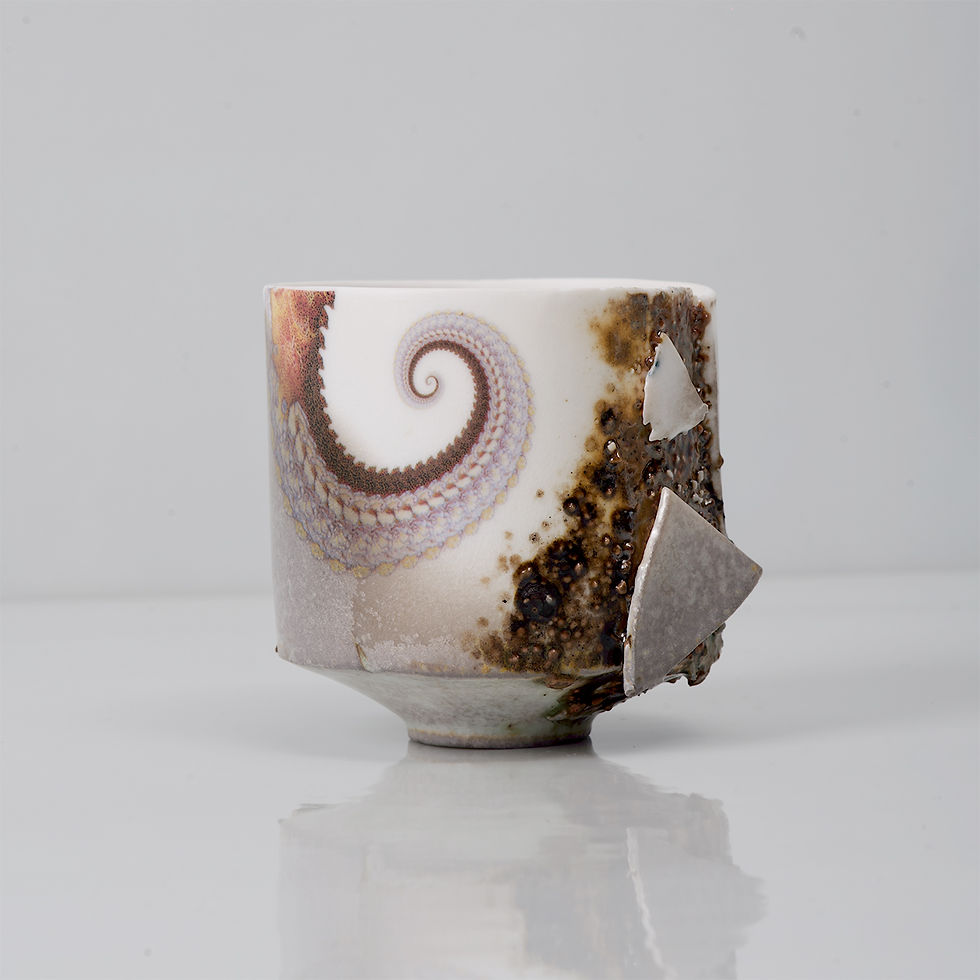
Deep Etch - Ashes to Ashes II (2).png
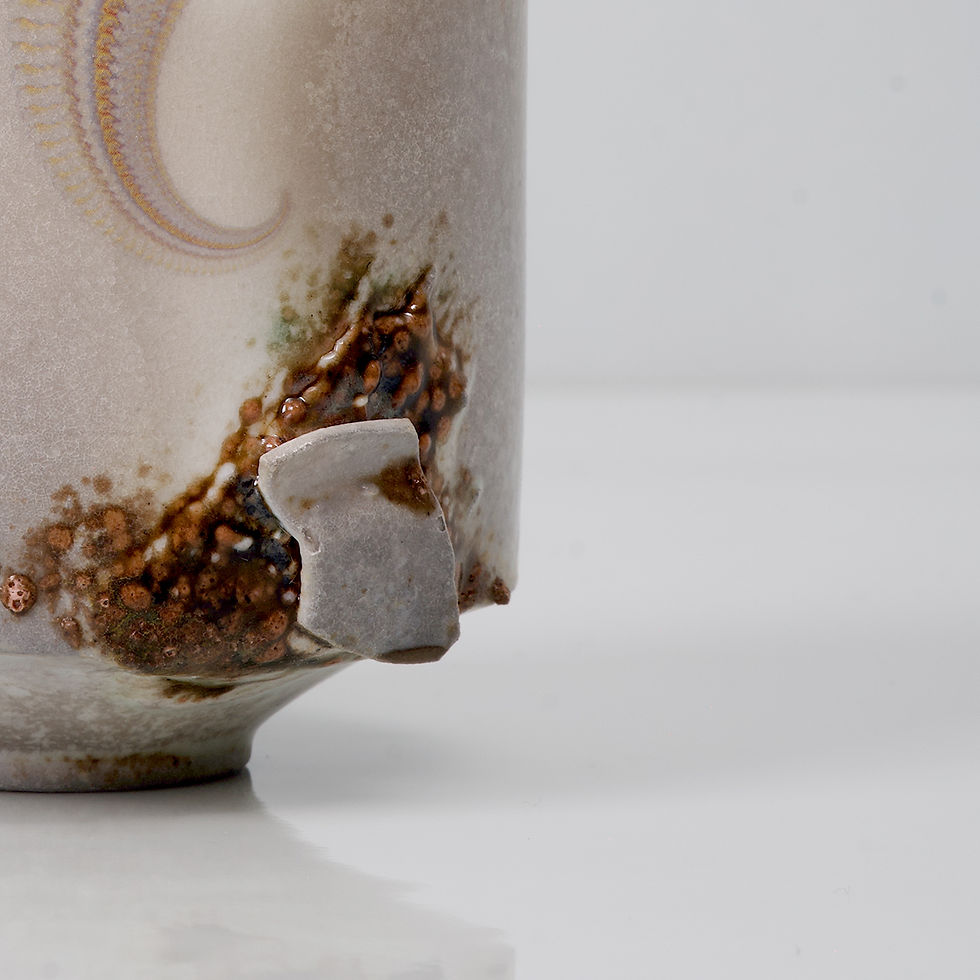
Deep Etch - Ashes to Ashes VIII (1).png

CURIOUS ENTANGLEMENTS

​

Article (Exec Summary) written by Caitlin MacDonald

Writer & Editor (Art Formes),

Researcher (Centre for Curating the Archive UCT),

Masters Student (MPhil Environmental Humanities)

​

Working against the logic of purity, Eugene Hön's Curious Entanglements are decompositions: morphing memory, subverting and stuttering forms, and staying with the trouble.


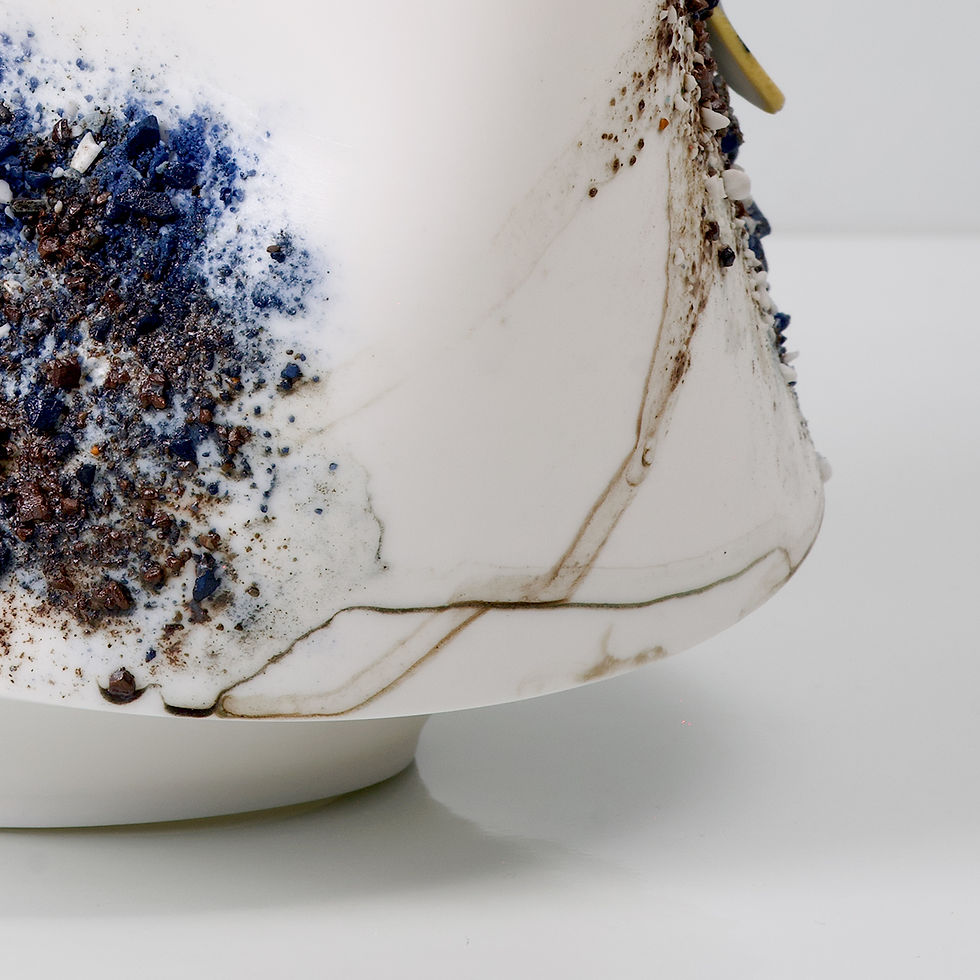
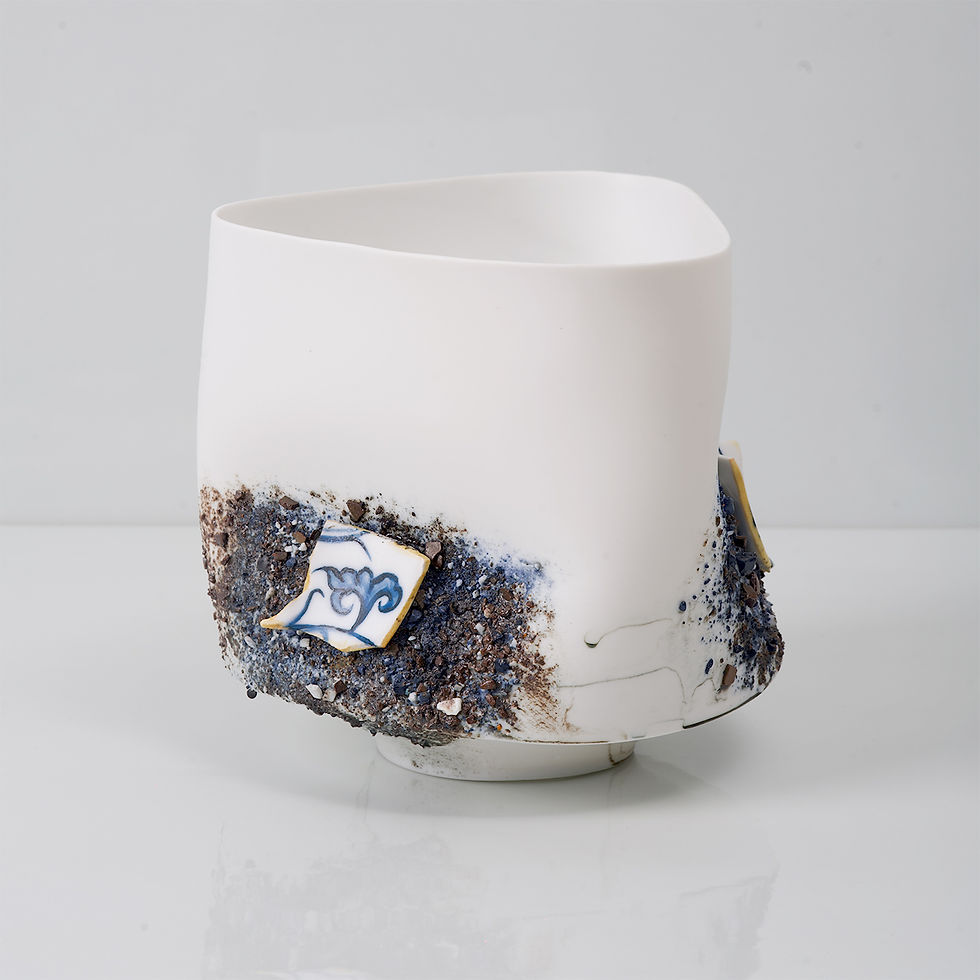
The vessels do not arrive in the world fully formed, unblemished. They are of the earth, marked by the shrapnel of their miraculous birth. Their bodies are crusted with debris of the clay womb, like comets spat out of the earth's core. These are vessels for the end of the world, made in gestures of repair, survival, and interspecies collaboration.


Hön's approach is multimodal. Intricate drawings of mycelium in ballpoint pen are digitally augmented with the assistance of graphic designer Dominic Hobbs, fudging, repeating, and contaminating fractal iterations which are then printed onto vessels which are themselves distortions of the ceramic, caked with dried fragments of discarded slip cast bodies. In cyborg-like collaborations, using computer-aided design and 3D technology, the artist generates innumerable phantom memories from these entangled two- and three-dimensional structures, transfers bleed into the textures of the crinkled shards or the smooth whiteness of exposed bone china. Octopus tentacles and fern fractals unfurl, mushroom clouds balloon, molten lava oozes, and sea slug softness laps up against scorched earth and grazing tar. Everything congeals to form compost, fragile rhizomatto iterations beyond simile.


Drawing on the multispecies ethnography of anthropologist Anna Tsing and the fungal studies of biologist Merlin Sheldrake, Hön's work forms delicate assemblages that mimic the relationships that are threatened and created in epoch of climate catastrophe. Fungal worlds emerge in the artist's work as a radical form of survival through collaboration and contamination. The fungal instinct for assemblage is at the heart of its resilience - fungus thrives in disturbed forests and in the violent microcosmos; it feeds on radioactive graphite at Chernobyl. The objects that populate Curious Entanglements remain unclosed, language-less, as muddled and muddied as our world, modelling in miniature the endlessly complex weave of vulnerable relationships through which we endure.

​

Mycelium Fractal 1
Mycelium Fractal 2
Mycelium Fractal 3
Mycelium Drawing
Ashes to Ashes Series (3)_edited.jpg

Introducing Ashes to Ashes (2025), recent porcelain vessels by Eugene Hon

​

Article by Carl Landsberg

BA Hons History of Art, Wits University Johannesburg

​

9  November 2025

​

Hon’s latest creative output, Ashes to Ashes (2025) is a dramatic high contrast iteration of expressive ceramic vessels that embrace mycelium (fungi) as a metaphor for change; the principal theme of his large body of work, Curious Entanglements. Utilising black and white porcelain bodies with contrasting monochromatic transfers, he has produced a range of striking vessel-like forms that mark a refined and expressive culmination of his recent creative explorations.


The suggestive title of Eugene Hon’s black and white themed range of porcelain vessels, ‘Ashes to Ashes’ is a phrase from the Book of Common Prayer (1662:332), ‘Ashes to Ashes, Dust to Dust’, which refers to  the cycle of life and death, indicating that all living things return to the earth from which they originated. The phrase signals the ephemerality of human life and the inevitability of death. There are numerous biblical references equating man with dust and ash including the creation myth which narrates that God formed man from the dust of the earth.


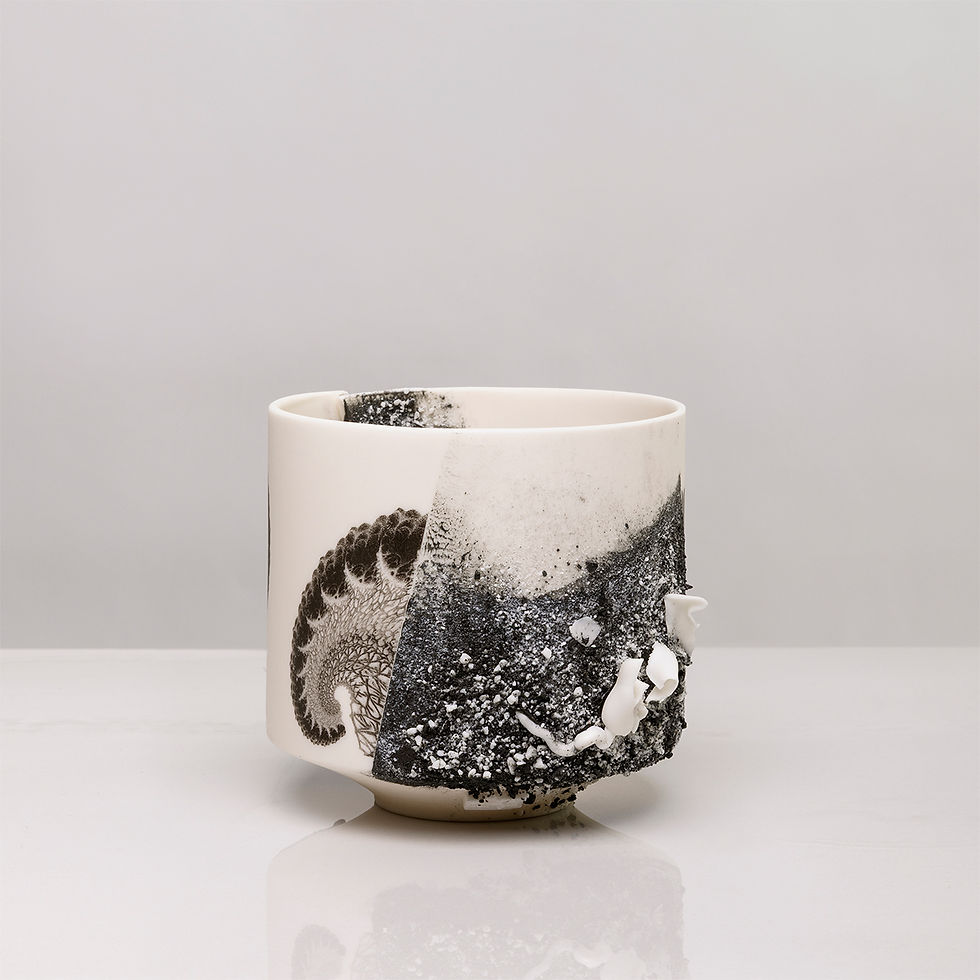
This range of porcelain vessels is distinguished by an elegant black-and-white theme, balanced and harmonious, yet operating in counterpoint through a compelling rhythmic interplay. Motifs mirror and contrast one another in black and white, particularly in the fractal-inspired designs, where claw-like, frond-like, and tentacle shapes dominate, graduating in size and detail.


A feature of this range of porcelain works which is particularly striking is Hon’s “pattern wrap” concept integrating the surface embellishments with the vessel form. The highly evocative and tactile ‘debris’ surface treatment—composed of applied granular porcelain fragments—extends into the interior of the vessels, spilling over their borders and contours. Similarly the fractal patterns emerge dramatically from the physical diagonal incisions in the vessel body, or from the counterposed  sharp-edged diagonals on the smooth surface of the vessel—created by masking areas on the surface of the vessel with newsprint before applying granular porcelain fragments during a second firing.


A defining attribute of this series of porcelain works is the intricate fractal/decal transfer designs which are applied to the vessel at the third and final firing stage. The decal designs are derived from the artists original ballpoint pen renderings of mycelium networks. These drawings are digitally scanned and abstracted into intricate fractal patterns of astonishing detail and definition, which are then cut from decal sheets printed in the UK by Digital Ceramic Systems Stoke on Trent, and applied to the surface by hand. The fractals are developed in collaboration with digital design/multi-media specialist, Dominic Hobbs. These fractals are essentially details of Hon’s original ballpoint drawings of mycelium, scanned and digitally enhanced, abstracted into fractal designs and rendered in grayscale print to enhance clarity and depth. White fractals in the form of printed ceramic transfers are fired in onto the black Parian clay bodies, rendering a harmonious greyscale counterpoint. This juxtaposition extends through to the debris surface treatment where contrasting black and white particles resonate against the contrasting colour of the core porcelain vessel. The finely blended porcelain fragments applied to the vessels share a tonal equivalence with the grayscale fractal decal designs. This highly evocative effect is reminiscent of the night sky; an association that inspired the working title of this series: “When dust lights up the Night Sky”.


Hon’s aesthetic approach to the Ashes to Ashes (2025) range of porcelains might be termed an oxymoronic minimalist maximalist design approach. The intrinsic elegant pared down cylindrical vessel form and dominant monochromatic palette align with contemporary minimalist design trends; however the surface treatment of the vessels is highly detailed and complex adding visual interest and intrigue in equal measure. Black or white become an active motif in this range of porcelain works. The balance between restraint and detail is carefully calibrated, the overall design retains composure and harmony, while investing in areas of intense detail such as the fractal designs, and the “debris” layered surfaces of coloured porcelain fragments. The inversion of the standard white coloured porcelain substituted with black porcelain, and the contrasting black/white designs and decorative motifs creates an arresting aesthetic statement. This visual statement is compounded by the charged metaphorical associations of the colour black, evocative of death, silence, absence, the cosmos, loss. Historical and heritage associations are also at play. The black porcelain recalls Josiah Wedgwood’s iconic black basalt ware developed in the 18th Century. In this way, the works assume the aura of museum artefacts.

​

The vessel surfaces appear natural, intrinsically beautiful and authentic with Hon respecting and harnessing the intrinsic qualities of porcelain. He skilfully emulates organic surfaces and natural phenomena, playing with spatial and perspectival depth, liminal space and optical illusion. The results suggest multiple dimensions where the vessel form, contrasting smooth and textured surfaces and fractal surface embellishments are fully integrated and interactive. Hon’s approach is sculptural with the vessel forms decorated in the round and intended to be viewed in the round.


Particularly noteworthy is the clarity of silhouettes in the vessel shapes, the juxtaposition of finishes in black and white elements; and Hon’s quirky and original ‘pattern wrap’ design component where the pattern making and the debris surface embellishment—applied through porcelain fragments and fractal transfers—extends into the interior of the vessels. This integration unites the entire vessel surface, flowing over edges and around curves, distorting perspective; thereby giving each porcelain vessel a sense of cohesive unity rather than mere decoration.


Furthermore through the scale variation of both vessel size and decorative motifs the artist modulates the tightness or density of the patterning and surface texturing to guide the eye and balance the visual weight of the pieces. The result is a series of porcelain vessels of remarkable sophistication, each a sense of inevitability being “just right.” The result is a series of porcelain vessels of remarkable sophistication, each possessing a sense of inevitability—of being ‘just right’. Hon’s is a practice driven approach to design, learning through making, constantly honing and refining his techniques to allow the shape and surface of every vessel to tell its own story.

​

The metaphorical weight and associations of the surface embellishments and iconography deployed are explicated by Hon on his website and Instagram accounts , which offer key insights into the evolution of his concepts and the formal and stylistic decisions underpinning this series.

​

Of particular significance is the concept of rot /decay, inaction, and the dormant cycle of nature—a fallow period in which the soil and ecosystem reset, preparing for new or adaptive growth. Mycelium thrive in these situations as ‘value maker agents’. Metaphorically this signals a call for self-reflection and a re-examination of human interactions with the natural world,  a call for new forms of co-existence. This concept finds representation in the dust crusted fragmented segments of the vessels, as well as the unadorned smooth polished porcelain surfaces which interrupt the heavily encrusted surfaces. Visually these in-between spaces reference death and decay, rot and renewal:

​

Fungal life starts with something else dying, and the sequence of decomposition and recycling organic (and sometimes inorganic) matter on the planet is how fungi make sure no energy is lost. And is instead  transformed into new life. They thrive on waste and decay and are, in essence, trash monsters and value-makers at the same time. … Mycologist and founder of the Fungi Foundation, Giuliana Furci, states (metaphorically speaking), the same needs to happen in the process of ideals and ideas,  They need to decompose in order for new ones to arrive. It’s really important to let ideas rot. Let them disintegrate and give life to new ideas (Ostendorf-Rodriquez 2024:98).


Hon uses the porcelain material and surface as well as the surface embellishments and motifs as a metaphor for fragility, transience, and resilience—a canvass for an urgent discourse and reflection on the interrelationship between humanity and the natural world. Hon’s work functions partly as an ecological critique engaging with pressing environmental concerns related to the current Anthropocene geological age—the period during which human activity has been the dominant and most destructive influence on the climate and environment.


Referring to his drawings of mycelium networks—adapted as fractal designs and applied to his vessels as ceramics transfers—Hon suggests that the fractal patterns serve as metaphors for regeneration, rebirth, growth, and restoration, conveying a hopeful message. He cites Anna Lowenhaupt Tsing (2015:4) who notes that in a world facing economic and ecological precarity, our only option is to seek signs of life within the ruins.
 

Hon’s expressive vessels visually and metaphorically encapsulate the cycle of life and death—from dust to dust, ashes to ashes, as a never-ending cycle of death, decay, and renewal, degeneration and regeneration. A reminder that beauty can emerge from the seemingly ugly, and that hope emerges from the shared connections and relationships between all living things.
 

[1] Ostendorf Rodríguez, Y.  2023. Let’s Become Fungal!: Mycelium Teachings and the Arts: Based on Conversations with Indigenous Wisdom Keepers, Artists, Curators, Feminists and Mycologists. Valiz, Amsterdam.​

​

[2] The Church of England 1662, The Book of Common Prayer. Oxford University Press.

​

[3] Tsing, A.L. 2015. The Mushroom at the End of the World: On the Possibility of Life in Capitalist Ruins. Princeton University Press.

​

B&W-Mycelium-2-for-Website.png
B&W-Mycelium-5-for-Website.png
B&W-Mycelium-3-for-Website.png
B&W-Mycelium-7-for-Website.png

ASHES TO ASHES
Ashes to Ashes Series (2)_edited.jpg

ASHES TO ASHES

Ashes to Ashes Series (1)_edited.jpg

LICHEN

WOODFIRED - DEBRIS

WOODFIRED - CURIOUS ENTANGLEMENTS

JINGDEZHEN

PORCELAIN

Curious Entanglements - Collection 1.jpg

PORCELAIN

Curious Entanglement Vessel II
Curious Entanglement Vessel V
Curious Entanglement Vessel III
Curious Entanglement Vessel I

EARTHENWARE

DRAWING

FRACTALS

bottom of page